
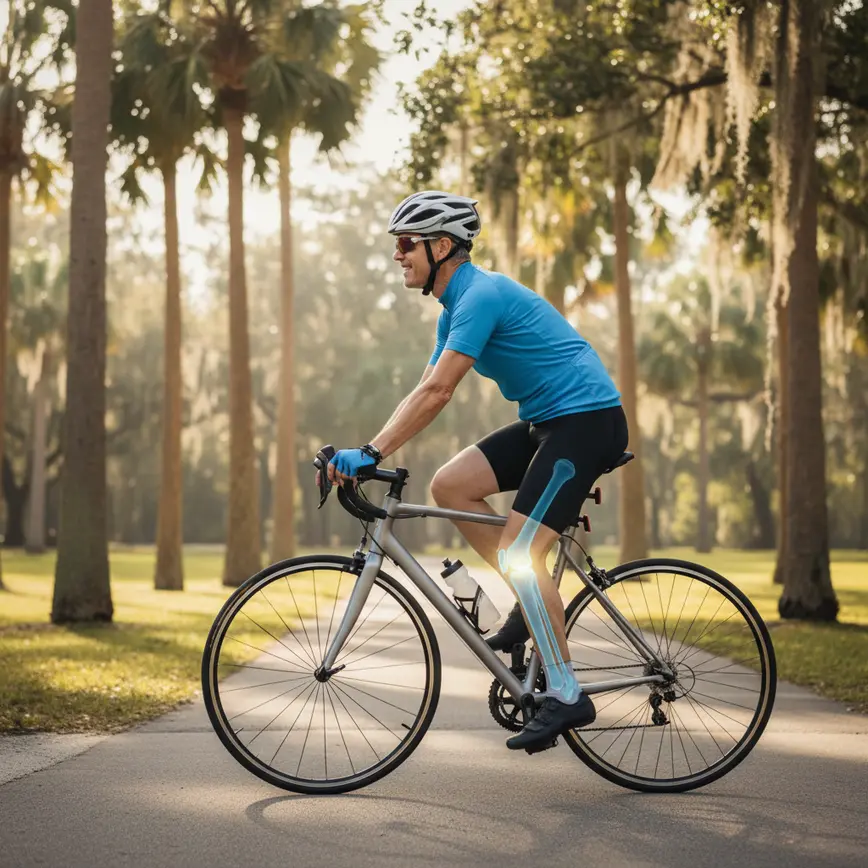

Stem Cell Therapy for Knees in Seminole County offers a regenerative medicine option for individuals seeking alternatives to traditional knee treatments. This page explores how residents in Sanford, Lake Mary, Altamonte Springs, and nearby cities can access advanced therapies aimed at addressing knee pain through natural healing processes. With a focus on local healthcare context, it provides insight into what regenerative injection therapies involve and their potential role in managing knee conditions specific to Seminole County.
What Is Stem Cell Therapy for Knees?
Regenerative injection therapy for the knee involves injecting biologic substances like stem cells or platelets to support tissue repair and reduce inflammation. It is a minimally invasive approach designed to stimulate the body’s own healing mechanisms without surgery. This therapy targets joint structures affected by degenerative changes common in Seminole County adults experiencing knee discomfort.
How Much Does Stem Cell Therapy for Knees Cost in Seminole County?
In Seminole County, regenerative injection therapy for knees typically costs between $3,000 and $8,000 per knee. This range reflects local market rates and the variability of treatment protocols. Patients should consider this financial aspect alongside potential benefits and consult with providers for detailed cost estimates tailored to their specific knee condition.
How Common Is Knee Arthritis in Seminole County?
Knee arthritis affects approximately 24% of Florida’s adult population, about 5.2 million people, including many in Seminole County. With 21.8% of Florida residents aged 65 or older and Seminole County’s own age demographics, the demand for knee pain management options continues to grow. Annually, over 800,000 total knee replacements occur nationwide, highlighting the need for alternative therapies.
When Should You Consider Stem Cell Therapy for Knees Right Now?
Regenerative therapy may be considered in several knee pain scenarios common to Seminole County residents. Below are examples illustrating when such treatments might be appropriate or preferred over other interventions.
Managing Knee Osteoarthritis in Seminole County’s Active Adults
Many Seminole County adults engaged in outdoor activities experience knee osteoarthritis. Regenerative injections may help reduce symptoms and improve function, potentially delaying the need for surgery.
Post-Injury Knee Pain in Seminole County Athletes
Athletes in Seminole County recovering from ligament or cartilage injuries might explore stem cell therapies to support tissue healing and reduce inflammation.
Knee Pain in Seminole County Seniors Seeking Non-Surgical Options
With Seminole County’s growing senior population, those hesitant about surgery may consider regenerative treatments as a less invasive alternative for symptom relief.
Avoiding or Delaying Knee Replacement in Seminole County
Residents in Seminole County facing moderate knee degeneration sometimes use regenerative injections to potentially postpone total knee replacement surgeries.
Persistent Knee Pain Despite Conservative Care in Seminole County
For Seminole County patients whose knee pain persists after physical therapy and medications, regenerative therapy offers an option to address underlying tissue issues.
Explore Seminole County Knee Therapy Options
The free knee screening is available to a limited number of qualifying patients each month at Revive by MWS, 920 E Dixie Ave Suite A, Leesburg, FL 34748.
Regenerative Therapy vs Total Knee Replacement in Seminole County?
Deciding between regenerative therapy and knee replacement involves weighing factors like severity, risks, and recovery. The table below compares key considerations relevant to Seminole County patients.
| Factor | Regenerative Injection Therapy | Total Knee Replacement |
|---|---|---|
| Procedure type | Outpatient injection at the Leesburg clinic, no incision | Major surgery, hospital stay typically 1 to 3 days |
| Recovery timeline | Most patients return to daily activity within a few days; no incision or hospital stay | Initial recovery 6 to 12 weeks, full recovery up to 1 year per AAOS OrthoInfo |
| Activity restrictions | None imposed by the procedure itself | Permanent restrictions on high-impact activity such as running and jumping |
| FDA regulatory status | Not FDA-approved, considered investigational | FDA-cleared implants and long-established surgical procedure |
| Evidence quality | 2025 Cochrane review: may modestly improve knee pain and function; low-to-moderate certainty | Decades of clinical outcome data; established for advanced arthritis |
| Reversibility | Does not remove the option of surgery later | Permanent joint replacement; can only be revised, not undone |
| Insurance coverage | Typically not covered | Usually covered for qualifying advanced osteoarthritis |
| Out-of-pocket cost | $3,000 to $8,000 per knee; financing plans available over 12 to 24 months | $30,000 to $50,000 total procedure cost, typically covered by Medicare or private insurance after deductible |
| Complication risk | Injection-site soreness or swelling is common; serious infection is rare | Approximately 1% risk of surgical-site infection, 1% risk of blood clot, 5 to 10% overall complication rate per AAOS OrthoInfo |
| Long-term durability | Can be repeated as needed; no permanent hardware in the joint | Implant lifespan typically 15 to 20 years per AAOS OrthoInfo; revision surgery required at end of implant life |
| Best candidate | Mild to moderate arthritis, active adult, wants to avoid or delay surgery | Advanced bone-on-bone arthritis, failed conservative treatment, ready for permanent solution |
How Does the Procedure Work?
At our Seminole County clinic, regenerative knee procedures begin with a thorough evaluation. Using sterile technique, a biologic product such as stem cells or PRP is injected precisely into the affected knee joint. The session typically lasts under an hour, followed by scheduled follow-ups to monitor progress and provide guidance on activity and rehabilitation.
How Do You Vet a Regenerative Medicine Clinic?
Patients seeking regenerative knee treatments in Seminole County should carefully vet clinics to avoid misleading claims and unsafe practices. Awareness of legitimate standards helps ensure safe care.
Common Questions About Stem Cell Therapy for Knees in Seminole County
Stem cell therapy for knees remains investigational per the FDA, including in Seminole County. No therapies are officially approved, so treatments offered are considered experimental and should be discussed thoroughly with local specialists.
Seminole County clinics commonly offer platelet-rich plasma, autologous stem cells, and exosome therapies for knee conditions. The choice depends on individual assessment and specific knee pathology.
Costs in Seminole County typically range from $3,000 to $8,000 per knee. Exact pricing varies by treatment type and clinic protocols, so patients should request detailed quotes.
Most insurance plans in Seminole County do not cover investigational regenerative therapies. Patients may explore financing options or pay out-of-pocket for these treatments.
Recovery time varies but generally involves a few days of rest followed by gradual return to activity. Seminole County providers give personalized post-procedure guidelines.
While some Seminole County patients experience symptom relief that delays knee replacement, outcomes vary. Regenerative therapy is not a guaranteed alternative to surgery.
Look for licensed providers in Seminole County who use FDA-compliant protocols, offer transparent pricing, and provide thorough consultations including imaging review.
Cities in Seminole County
Our regenerative medicine services extend throughout Seminole County, including Sanford, Lake Mary, Altamonte Springs, Casselberry, Longwood, Oviedo, and Winter Springs. Residents in these cities have access to advanced knee therapies designed to address local patient needs.
← Back to Stem Cell Therapy for Knees in Central Florida (hub)
Start Your Seminole County Knee Care Journey
Revive by MWS is located at 920 E Dixie Ave Suite A, Leesburg, FL 34748. The screening is available to a limited number of qualifying patients each month and includes candidacy review, imaging discussion, and a clear conversation about whether regenerative therapy fits your case.
What Sources Support This Page?
Education only. Not medical advice. Stem cell and exosome injections for knee osteoarthritis are not FDA-approved and are considered investigational. Individual results vary. Consult a licensed medical provider about your specific case.